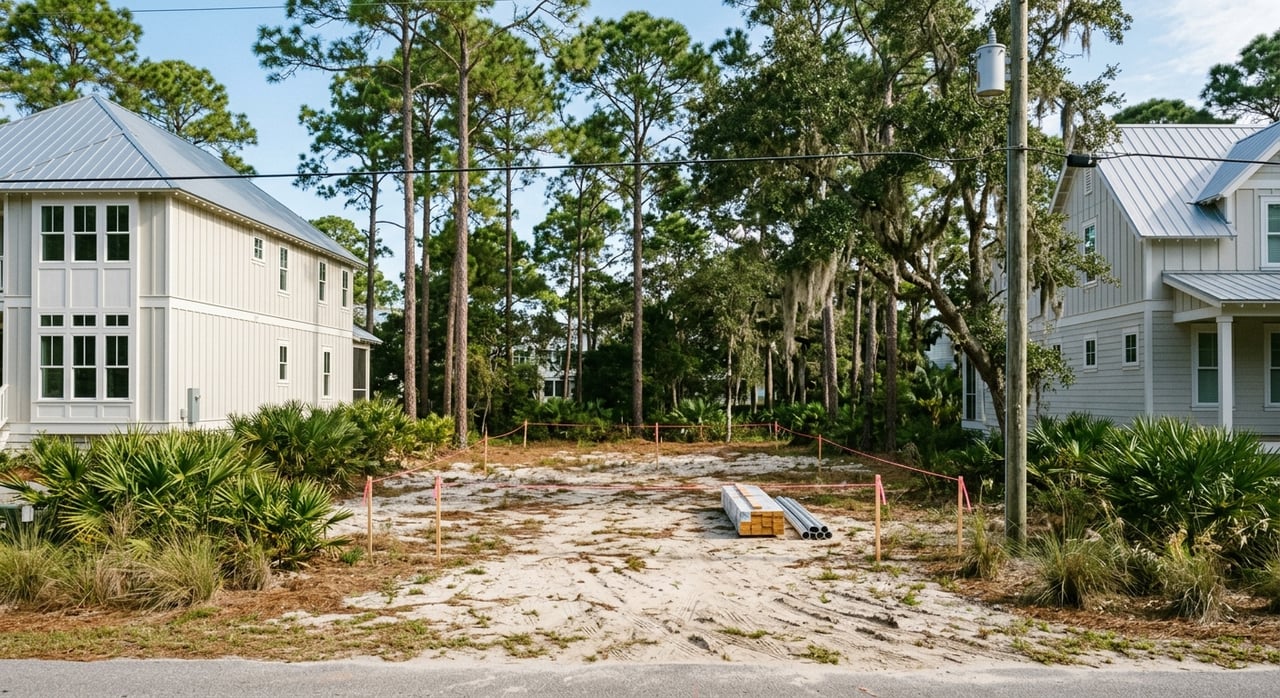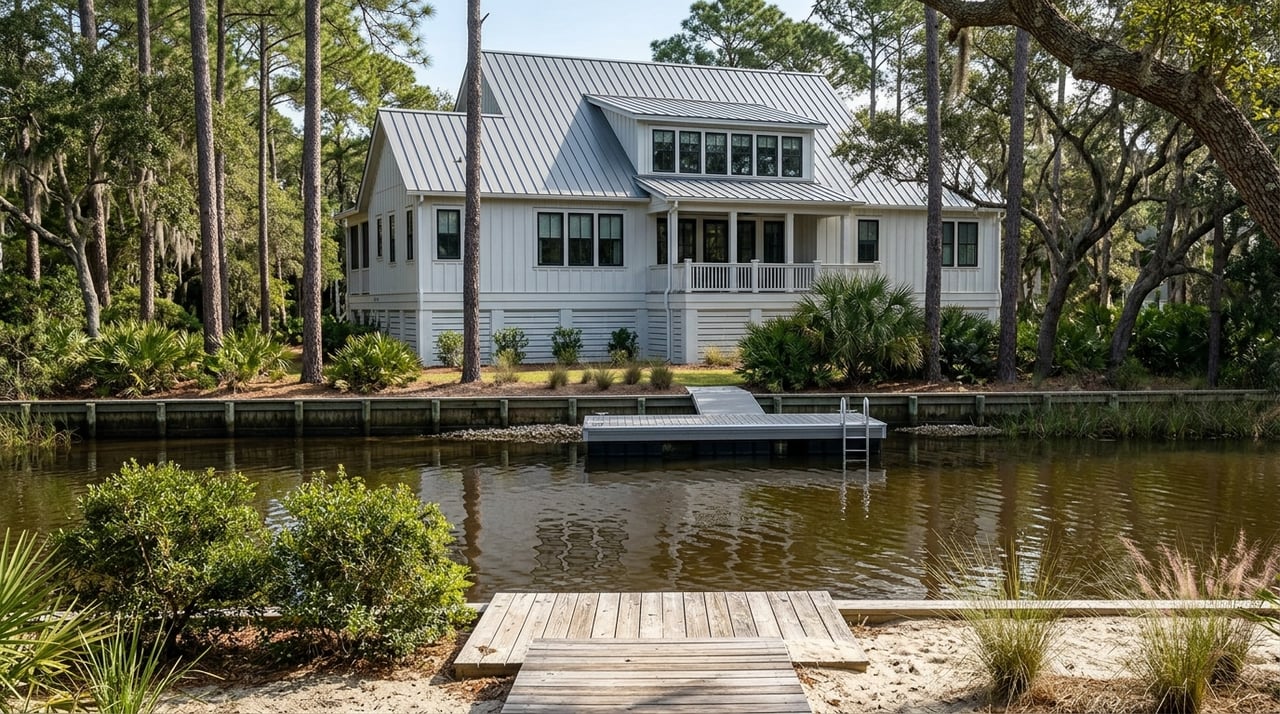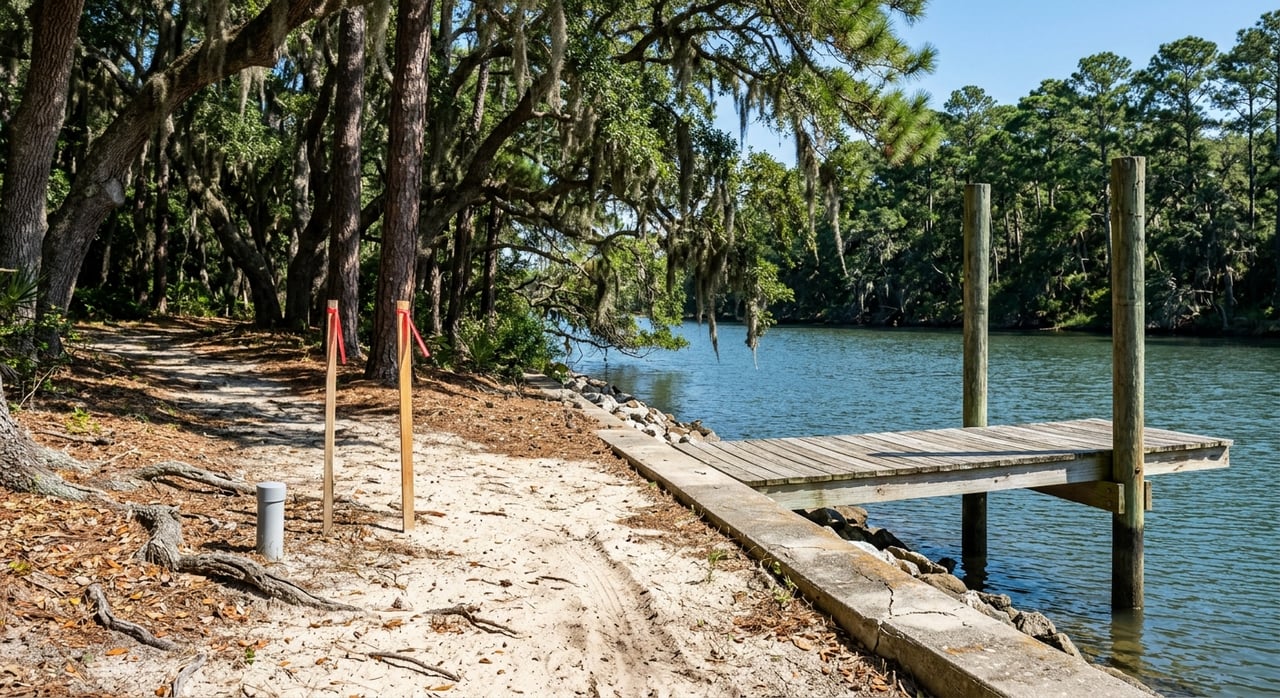
A bayfront lot in Santa Rosa Beach can look simple on paper and get complicated fast once you start planning a home, dock, or redevelopment. If you are shopping for waterfront land, you are probably thinking about views, access, and long-term value, but the real story often comes down to flood rules, shoreline setbacks, utility planning, and permitting. This guide walks you through the key bayfront land issues to understand before you write an offer, so you can make a more informed decision with fewer surprises. Let’s dive in.
Why bayfront land works differently
Bayfront land in Santa Rosa Beach is not controlled by just one set of rules. In many cases, you may need to account for Walton County land-development standards, Florida environmental permitting, possible U.S. Army Corps of Engineers review, and any private covenants or HOA restrictions recorded against the property.
That layered review matters because county rules do not replace private restrictions. Walton County states that it does not repeal, interfere with, or enforce private covenants or deed restrictions. In practical terms, that means a lot may appear buildable under county standards while still being limited by recorded private documents.
Another common surprise is the buildable area itself. A bayfront parcel may look large, but the usable footprint can shrink once shoreline buffers, wetland setbacks, flood elevation standards, and utility requirements are considered together.
Bay shoreline rules to know
For property along Choctawhatchee Bay, Walton County applies shoreline standards that can directly shape your site plan. The county identifies a Bay Shoreline Protection Zone that includes the bay and all land within 50 feet landward of the mean high water line of Choctawhatchee Bay and connected bayous.
Within that 50-foot buffer, development is generally not allowed except for limited items such as boardwalks, public access facilities, and landward portions of otherwise permitted docks. If you are picturing a house, pool, or other improvements close to the shoreline, this is one of the first standards to review.
The shoreline rules also affect what happens in the water. Walton County says docks and walkways should not be placed over submerged land with seagrasses except as needed to reach navigable water, and the docking terminus should avoid submerged vegetation when vessel access allows it.
Docks are not always simple
Many buyers assume adding a private dock is a straightforward next step after closing. On bayfront land, that assumption can create problems.
Florida DEP offers a self-certification path for some single-family dock projects, including some new docks, repairs or replacements of existing docks, and additions of boat lifts to existing docks. DEP also states that some projects may require a full permit instead of self-certification, especially when they fall under Environmental Resource Permitting or need authorization for use of state-owned submerged lands.
There may also be a federal layer. DEP explains that Section 404 applications are processed differently depending on whether waters are state-assumed or retained by the U.S. Army Corps of Engineers, and certain tidal waters and adjacent wetlands can remain under Corps authority.
That is why even a relatively small project may still need federal verification. The Jacksonville District public notice for SAJ-20 shows there is a Florida regional general permit covering private residential docks and minor structures, but buyers should not mistake that for an automatic approval.
Seawalls and shoreline stabilization limits
Shoreline stabilization deserves early attention too. If erosion is a concern, you should not assume you can solve it later with a new wall.
Walton County says new vertical seawalls and bulkheads are generally prohibited along Choctawhatchee Bay. There is only a narrow exception for a parcel located between two existing seawalls, and even then the new wall may not exceed 150 feet.
For redevelopment buyers, this can materially affect both site planning and cost. A property with an unstable shoreline may require a different strategy, and that is something worth understanding before you commit to the lot.
Flood zones shape design and financing
Flood review is central to any bayfront land decision in Santa Rosa Beach. Walton County states that FEMA determines flood-zone categories, and county floodplain staff use those maps during the review process.
If a parcel is in a Special Flood Hazard Area, the county says the application must be reviewed by the Flood Plain Manager and a development order is required before construction begins. That means flood conditions are not just a design concern. They can affect timing and approvals from the start.
The county’s elevation rules are also specific:
- In Flood Zone AE, finished living space must be at least 1 foot above base flood elevation.
- In VE and Coastal A Zones, the lowest horizontal structural member of the lowest floor must be at least 1 foot above base flood elevation.
- In Flood Zone A where no base flood elevation is determined, the finished floor must be at least 3 feet above the highest adjacent grade.
- In floodways, fill is prohibited, and encroachment requires a licensed engineer’s no-rise style evaluation.
Walton County also requires documentation during construction. Depending on the site, elevation certificates may be needed at three stages, and V-zone certificates are required in VE zones.
Flood zones can also affect how you purchase the property. FEMA states that federally regulated or insured lenders generally require flood insurance for buildings in a Special Flood Hazard Area when a federally backed loan is involved. For you as a buyer, that makes flood review part of both the build plan and the financing conversation.
Utility and septic planning matter early
Utilities are easy to overlook when you are focused on the waterfront setting, but they can quickly become a major part of due diligence. Walton County’s building checklist requires either a septic tank permit or a water and sewer availability letter from the utility provider, along with a planning-approved site plan.
On bayfront lots, septic placement can be especially important. Walton County says septic drain fields must be at least 75 feet from the ordinary or mean high water line in the bay shoreline protection area.
The county also lists setbacks of 25 feet for wetlands and 50 feet for the bay, river, and creek, with a reduced setback exception for some older lots of record under 200 feet deep. Those standards can significantly affect where a home, driveway, pool, and drain field may fit.
Clearing and site work may need approval first
Some buyers assume they can close on land and start clearing right away while final plans come together. In Walton County, that may not be the case.
The county’s code-compliance guidance says that if a parcel is south of the bay, a development order is required before clearing any land, and the clearing areas must be shown in development plans. For bayfront buyers, that is an important early check because access, grading, and prep work may require approval before meaningful site work begins.
If your plan includes subdividing, replats, or lot splits, the timeline can get longer. Walton County requires a pre-application meeting before it will accept a plat or replat application, and subdivision review can involve roads, stormwater plans, buffers, setbacks, and any needed state or federal permits.
Private restrictions can change the picture
County approval is only part of the story. Walton County specifically advises buyers to ask about lot-specific requirements before closing because some developments have unique rules that can limit home size or even foundation type.
This is especially relevant in areas with neighborhood plans, PUD overlays, HOA documents, or deed restrictions. Since the county does not enforce those private rules for the buyer, you will want to review them directly during due diligence.
For luxury and custom-build buyers, that review can be just as important as zoning. A waterfront parcel with strong visual appeal may still carry design or use limitations that affect what you can realistically build.
A smart due-diligence sequence
Before you move forward on a bayfront lot, it helps to follow a practical order of operations. That can save time, reduce surprises, and help you compare opportunities more clearly.
Start with these checks:
- Verify the survey, mean high water line, wetlands, and any seagrass-sensitive shoreline areas.
- Confirm the FEMA flood zone, base flood elevation, and whether the site is in AE, VE, Coastal A, or a floodway.
- Ask whether a dock, lift, seawall, or shoreline stabilization concept is realistically permitable under county, state, and federal standards.
- Confirm utility service, septic feasibility, and whether a water and sewer availability letter already exists.
- Review title documents, deed restrictions, HOA materials, neighborhood overlays, and any PUD conditions.
- If your plan includes clearing, subdividing, or major renovation, verify whether a development order or pre-application meeting is required before site work starts.
Why local guidance matters on bayfront lots
Bayfront land can be one of the most rewarding property types in Santa Rosa Beach, but it is rarely plug-and-play. The value is not just in the view. It is in understanding what the lot can support, how the approvals may unfold, and what that means for your timeline, budget, and long-term use.
That is where local, construction-aware guidance becomes especially useful. When you are evaluating premium land, the right questions up front can help you avoid expensive assumptions later.
If you are exploring bayfront land in Santa Rosa Beach and want a clear, informed view of the opportunity, connect with Anderson Group 30A for tailored guidance and a custom 30A market report.
FAQs
What makes bayfront land in Santa Rosa Beach more complex than a standard lot?
- Bayfront lots may be affected by Walton County shoreline rules, floodplain standards, environmental permitting, possible U.S. Army Corps review, and private deed or HOA restrictions, all at the same time.
What should you verify before buying Santa Rosa Beach bayfront land?
- You should confirm the survey, mean high water line, wetlands, flood zone, elevation requirements, shoreline improvement feasibility, utility availability, septic feasibility, and any private restrictions before writing or finalizing an offer.
Can you add a dock on a bayfront lot in Santa Rosa Beach?
- Possibly, but approval depends on the lot, shoreline conditions, submerged vegetation, and whether the project qualifies for DEP self-certification or needs additional state or federal review.
Are seawalls allowed on Choctawhatchee Bay waterfront property?
- Walton County says new vertical seawalls and bulkheads are generally prohibited along Choctawhatchee Bay, with a narrow exception for some parcels located between two existing seawalls.
How do flood zones affect building on bayfront land in Walton County?
- Flood zones can affect elevation standards, required documentation, permit review, and financing considerations, including whether flood insurance may be required by a lender.
Do private HOA or deed restrictions matter if the county says the lot is buildable?
- Yes. Walton County does not enforce private covenants for buyers, so a parcel may meet county standards but still be limited by recorded private restrictions.