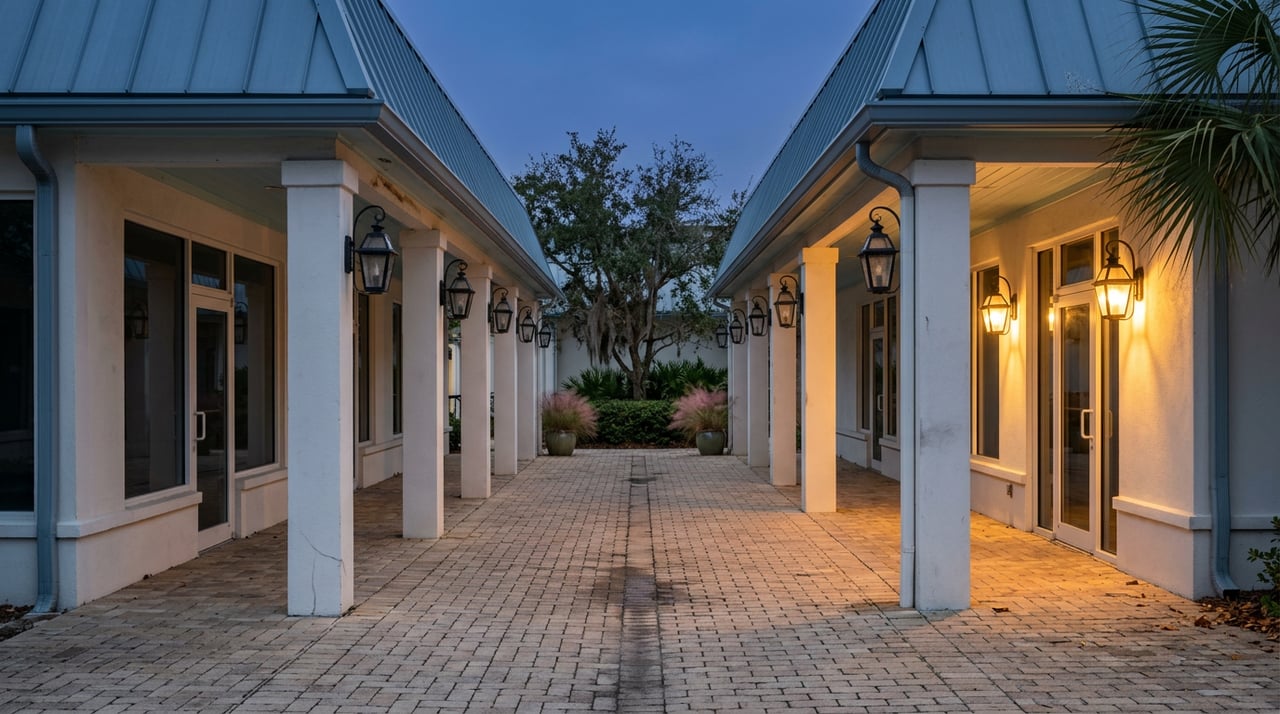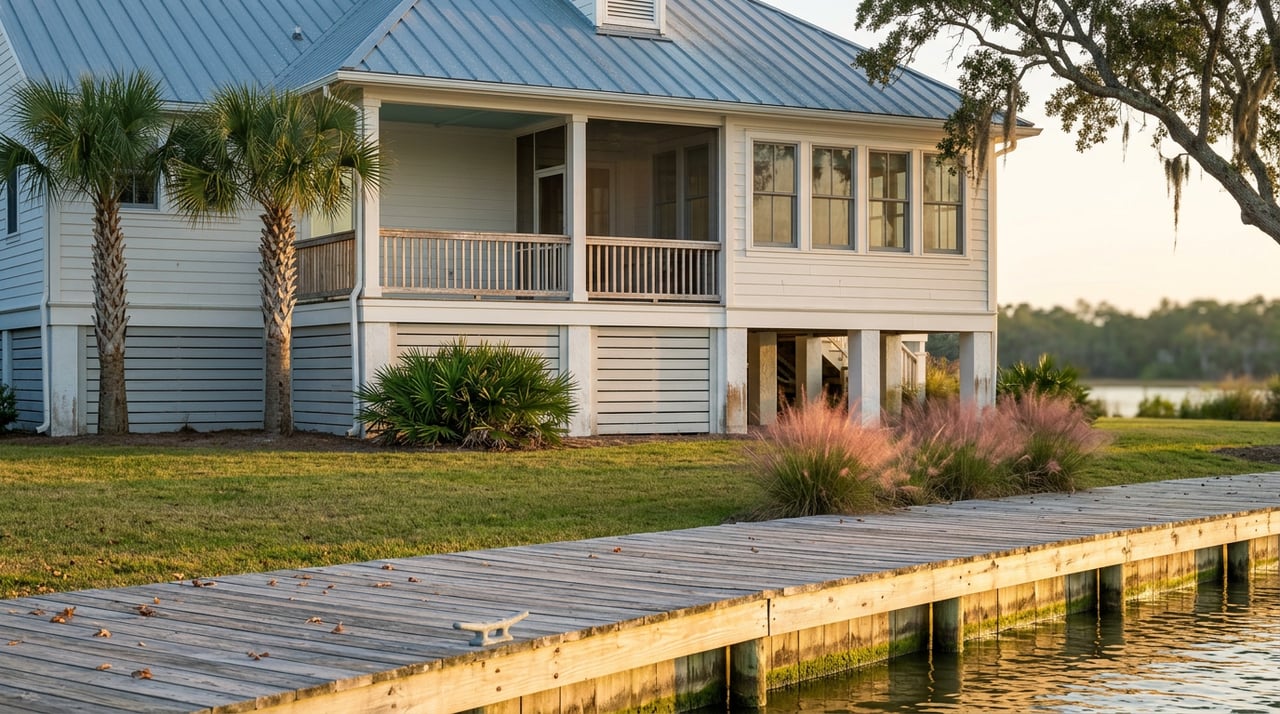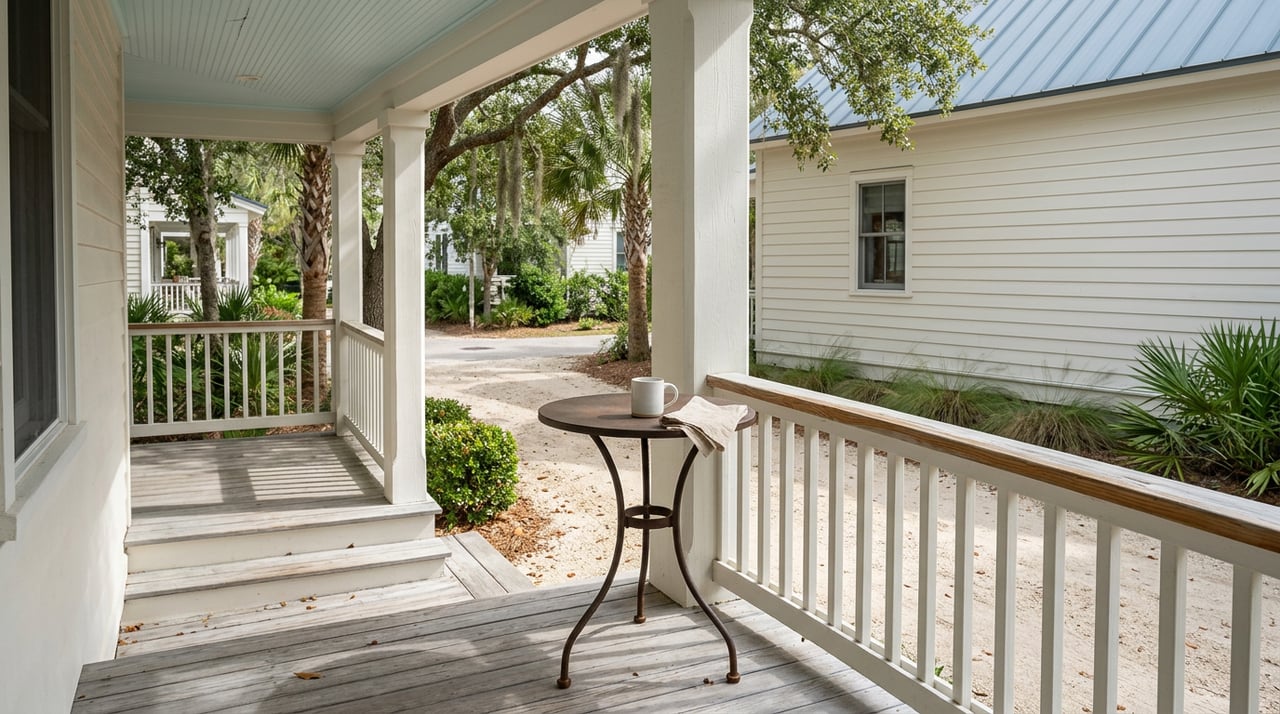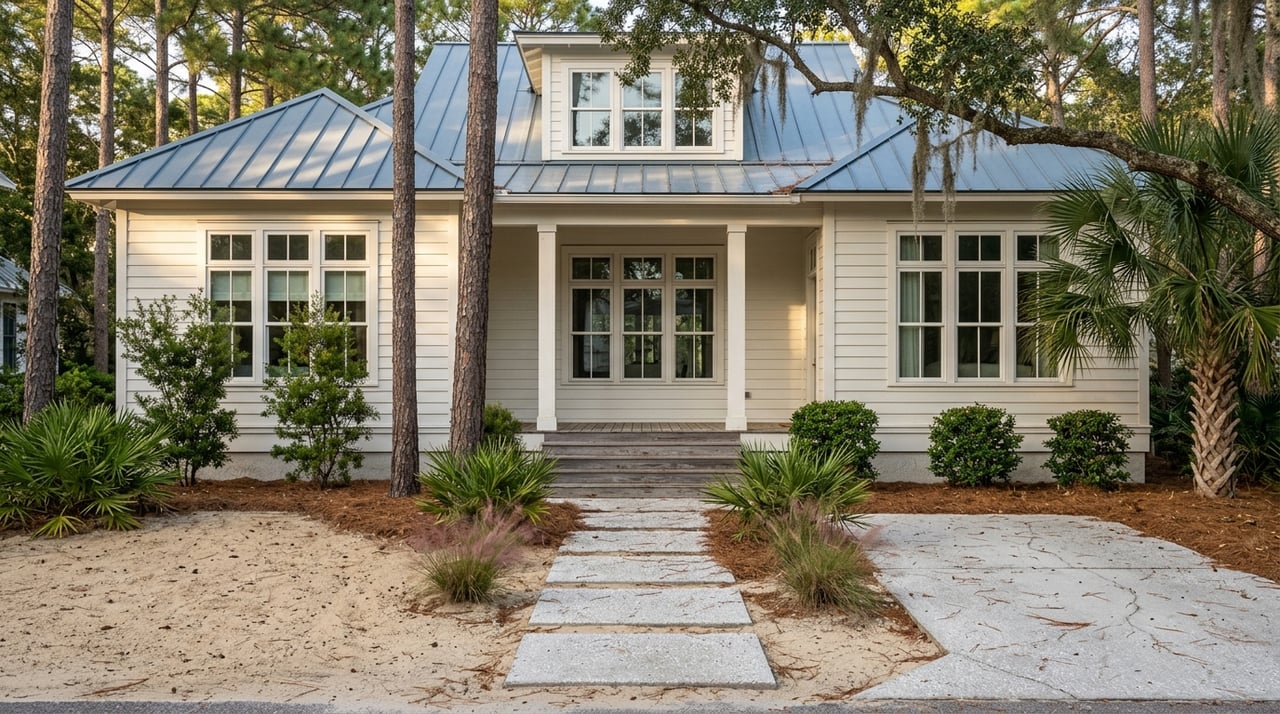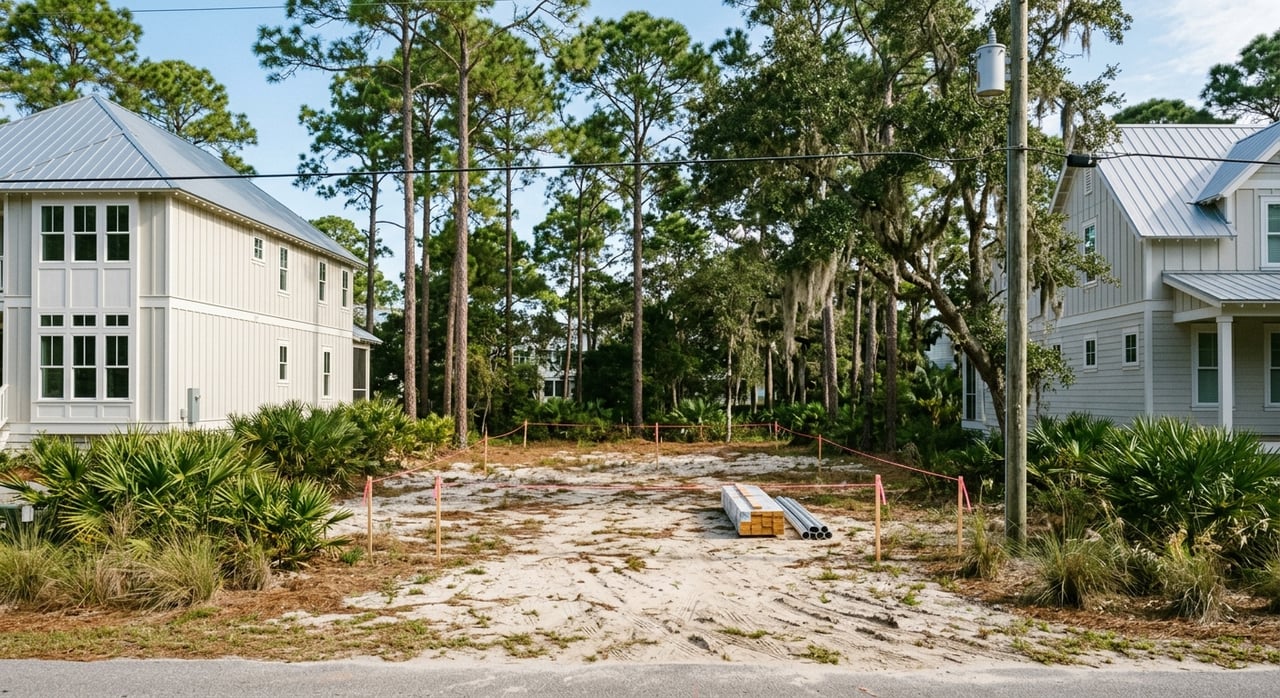
Dreaming about building in Inlet Beach? The exciting part is easy to picture: your floor plan, your finishes, your porch, and your first sunset. The harder part is knowing whether a lot can actually support the home you want under Walton County rules, flood standards, and coastal protections. This guide walks you through the key steps so you can plan smarter, avoid common surprises, and move from sand to keys with more confidence. Let’s dive in.
Why Inlet Beach Builds Need Planning First
Inlet Beach is not a blank canvas. It sits at the eastern end of Walton County between the Gulf and Lake Powell, and development in the area must comply with both Walton County’s Land Development Code and the Inlet Beach Neighborhood Plan.
That matters because a lot’s value is not just about location or size. Before you commit, you need to know whether the parcel has enough usable area for setbacks, utilities, stormwater, parking, landscaping, and environmental requirements, as outlined in Walton County’s design and development standards.
Start With Buildable Area
When you shop for land, start with buildable area, not headline lot size. A parcel may look generous on paper, but the usable footprint can shrink quickly once setbacks, easements, and buffers are applied.
For single-family residential lots in unincorporated Walton County, the base setbacks are generally 20 feet in the front, 7.5 feet on the sides, and 15 feet in the rear according to the county’s development code standards. If the lot has an access easement, setbacks may be measured from the easement line instead of the property line, which can change your design options.
Accessory improvements can also affect your plan. Pools, decks, hot tubs, and accessory structures often follow the same setback framework, so your site layout should be tested early, not after you fall in love with a plan.
Why easements matter early
Hidden access or utility easements are one of the easiest ways for a project to become more expensive or less feasible. A lot that seems perfect for a larger home, guest space, or pool may end up needing a different layout once those constraints are mapped.
That is why survey work and lot analysis should happen before contract or during your inspection period whenever possible. In Inlet Beach, the right due diligence can save months of redesign later.
Check Utility Service Before You Design
Utility availability is one of the biggest early decision points for a new build. Walton County states that if a project is served by both central water and central sewer, there is no minimum lot area for individual residential lots as long as the project still meets code standards under the county’s development standards.
If central water and sewer are not available, Florida Department of Health minimum lot-size rules for onsite systems come into play. For you as a buyer, that can directly affect whether a small infill lot still makes sense for the home you want to build.
Know The Inlet Beach Plan Rules
The Inlet Beach Neighborhood Plan can be more restrictive than the base zoning rules. That means your lot may meet general county standards but still face additional constraints tied to the planning area.
According to the Inlet Beach Neighborhood Plan, residential density south of US 98 is generally capped at 4 units per acre with central water and sewer or 3 units per acre with only central water service, while selected mapped parcels may allow 8 units per acre. North of US 98, residential density may go up to 8 dwelling units per acre, subject to compatibility with surrounding development.
The plan also sets important form and design limits. Single-family detached homes are limited to 50 feet in height, multifamily buildings to 40 feet, and accessory structures to 800 square feet. It also encourages side- or rear-yard parking, limits front driveways to 20 feet when possible, and discourages garages from dominating the front facade.
Design choices can affect approvals
In a coastal community like Inlet Beach, site design is about more than aesthetics. Parking placement, driveway width, and how the front of the home presents to the street can all influence whether a design aligns with the neighborhood plan.
If you are aiming for a custom home, it helps to evaluate design concepts alongside the lot, not after lot purchase. That keeps your vision aligned with what the parcel can realistically support.
Watch For Coastal And Environmental Triggers
Some of the biggest project changes in Inlet Beach come from coastal and environmental overlays. These are not small details. They can reshape lot feasibility, timeline, and permitting strategy.
Walton County states that new lots cannot be created entirely within the Coastal High-Hazard Area, and lots that are only partly within it must still have enough buildable area outside that hazard area for the intended use under Chapter 4 of the county code. The county also will not approve construction seaward of the Coastal Construction Control Line until required state and federal permits are obtained.
If a parcel falls within the Coastal Dune Lake Protection Zone, additional requirements may apply, including a land-clearing permit, a 100-foot no-disturbance buffer from the ordinary or mean high water line of the lake, a 50-foot vegetated buffer at the natural outlet, and a requirement that at least 60 percent of the parcel area within the 300-foot protection zone remain pervious.
Beach-adjacent lighting can matter too
Properties within 750 feet of the Gulf of Mexico’s mean high-water line may be subject to Walton County’s wildlife-lighting requirements. The county asks that lighting not directly or indirectly illuminate the beach.
Certain parcels may also trigger coordination related to Choctawhatchee Beach Mouse habitat. That does not automatically stop a project, but it can add review steps that should be identified early.
Flood And Wind Rules Shape Coastal Construction
In Inlet Beach, structural planning is a real part of the process. Walton County notes that the 2023 Florida Building Code took effect on January 1, 2024, and the county’s building code resources show Walton County wind-speed lines of 120, 130, and 140 mph.
For coastal-zone applications, the county also requires certification by a Florida-registered architect or professional engineer, along with a survey-based topographic map identifying the primary dune system and relevant coastal zones. In other words, this is not the place to leave site engineering until the last minute.
Flood compliance is just as important. Walton County’s building requirements state that in Flood Zone AE, the finished floor of living space must be at least 1 foot above base flood elevation. In VE and Coastal A zones, the lowest horizontal structural member of the lowest floor must be at least 1 foot above base flood elevation. In Zone A without a base flood elevation, the finished floor must be at least 3 feet above the highest adjacent grade.
The county also requires elevation certificates at multiple stages, plus additional documentation such as non-conversion agreements for areas below base flood elevation and V-zone certificates for VE-zone buildings.
Use flood tools before contract
Flood review is one of the fastest and most useful due diligence steps. Walton County explains that FEMA flood maps are available through the county’s flood map guidance, and the Floodplain Manager can provide a parcel determination, with many requests processed within one business day.
That makes flood status one of the first things to verify before you commit to a lot. It can affect design, insurance, construction costs, and your overall timeline.
Understand The Permitting Sequence
A new build in Inlet Beach follows a sequential review process. Walton County says Planning and Development Services first reviews single-family homes, swimming pools, and most accessory structures for Land Development Code and Comprehensive Plan compliance. Only after that approval does the project move to the Building Department.
All planning applications are now accepted through EnerGov, but the bigger takeaway is this: planning review comes before building permits. That means the schedule is often decided long before any construction begins.
A Realistic Inlet Beach Timeline
Every project is different, but a practical planning timeline for an Inlet Beach new build often looks like this:
- Due diligence before contract or during inspection: 2 to 6 weeks
- Survey, concept design, civil engineering, and flood/coastal review: 1 to 3 months
- County review and any added state or federal approvals: 1 to 3+ months
- Construction for a custom or semi-custom coastal home: often 8 to 14+ months
- Closeout, elevation documentation, and final inspections: several additional weeks
These are planning estimates based on Walton County’s review process and common coastal triggers. They are not fixed deadlines, but they are useful for setting realistic expectations.
Common Issues That Slow A Build
Most delays are preventable when they are identified early. In Walton County, common schedule risks include incomplete lot due diligence, hidden easements, flood-zone surprises, coastal-zone permitting, stormwater design changes, and wildlife-lighting or habitat reviews.
Because setbacks can shift with easements, preservation areas, and corner-lot conditions, and because flood and coastal rules can require outside certifications or permits, the lot itself often determines the project timeline more than the floor plan does.
Build Your Team Around The Lot
In Inlet Beach, a successful build usually starts with the right land analysis and the right local guidance. Before you choose finishes or finalize plans, you want answers to a few key questions:
- Does the lot fit the house after setbacks and easements?
- Is it inside the Inlet Beach planning area?
- Is it in a flood hazard area or near the Coastal Construction Control Line?
- Could it trigger dune lake, wildlife-lighting, or habitat requirements?
- Are central water and sewer available?
Those answers shape budget, timing, and design from day one. If you are considering a homesite or planning a custom build in Inlet Beach, Anderson Group 30A brings local coastal market insight and hands-on lot advisory experience to help you evaluate the land first, then move forward with clarity.
FAQs
What should you check before buying a lot in Inlet Beach for a new build?
- You should confirm buildable area, setbacks, easements, utility service, flood status, neighborhood-plan rules, and any coastal or environmental overlays before closing on the lot.
How do setbacks affect a new home build in Inlet Beach?
- Walton County’s base single-family setbacks are generally 20 feet front, 7.5 feet side, and 15 feet rear, but easements and corner-lot conditions can further reduce usable building area.
Does the Inlet Beach Neighborhood Plan affect custom home design?
- Yes. The plan can limit density, height, accessory-structure size, driveway width, and parking layout, so your design should be reviewed against both the plan and county code.
Why is flood-zone research important for an Inlet Beach lot?
- Flood-zone status can affect finished floor elevation, structural design, permit requirements, documentation, insurance considerations, and overall construction cost.
How long does it take to build a new home in Inlet Beach?
- A realistic timeline often includes several weeks for due diligence, a few months for design and review, 1 to 3+ months for approvals, and roughly 8 to 14+ months for construction, depending on the lot and project complexity.
Are beach-adjacent lots in Inlet Beach subject to extra lighting rules?
- Yes. Properties within 750 feet of the Gulf’s mean high-water line may be subject to Walton County wildlife-lighting requirements intended to avoid illuminating the beach.